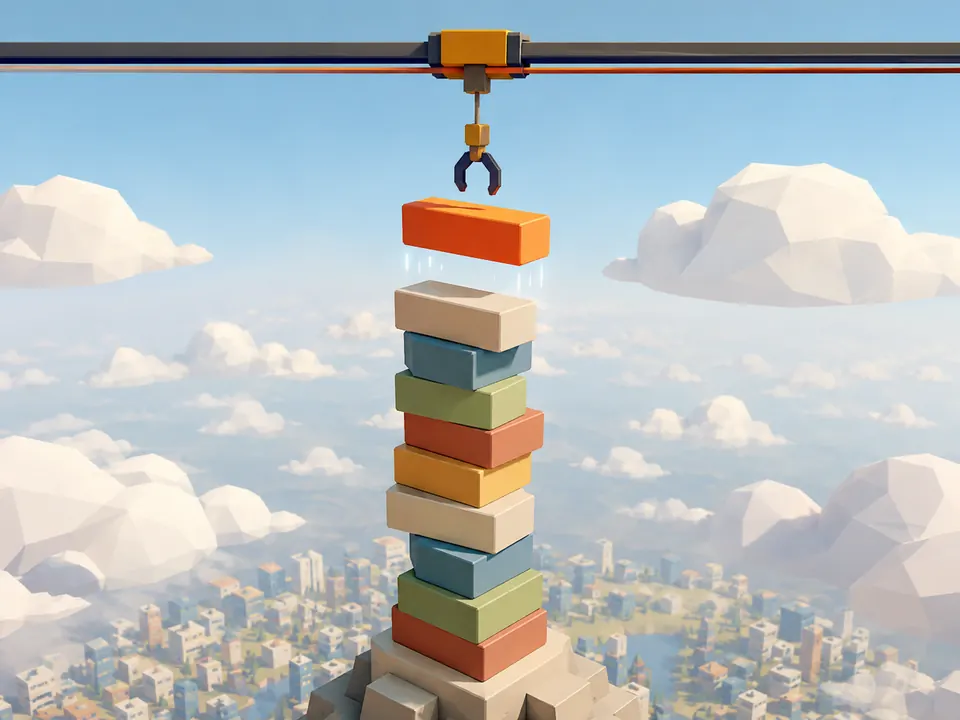
Sky Stack is built around one action: tap to release the block. The crane keeps moving, gravity takes over, and the tower has to live with every decision. A small mistake does not end the run immediately, but it changes how the whole structure behaves above it.
Watch the block, not the hook
The hook and cable add motion, but the block's center is the useful reference. I wait until that center is moving toward the middle of the tower, then release a little before it arrives. The remaining sideways momentum carries the block through the last part of the swing.
A safe overhang is still a cost
A partially supported block can stay in place, which makes a risky save feel good. It also shifts the tower's balance and adds more sway to later drops. When I have a choice between a flashy edge landing and a plain centered landing, I usually take the center.
Perfect drops create breathing room
A centered landing earns a Perfect callout and helps build a score combo. More importantly, it keeps the top platform predictable. Several clean placements in a row make the next difficult block much easier to read.
The sky is a progress marker
The scene changes as the tower rises from daylight into warmer clouds and then into a deep-blue upper sky. Wind also becomes more noticeable at height. I treat each color change as a reminder to slow down, because the same timing that worked near the ground may need a small adjustment higher up.
Let a bad tower teach the next run
When the structure finally gives way, the result screen saves the best score and best height on the device. I designed the restart to be immediate because a failed run usually leaves one clear idea: release earlier, protect the center, or stop chasing a risky combo.
Sky Stack was created and developed by Even Ouyang for Arcade Nibble.